The Dubai desert is spectacular, no question. Those golden dunes, the endless sky, the adrenaline rush of conquering steep slopes in a powerful buggy all combine to create unforgettable memories. But here's what tour brochures don't always emphasize: that same sun beating down on those gorgeous dunes is also beating down on you with UV intensity that can burn your unprotected skin. And that’s why sun protection on buggy tours isn't optional. It's absolutely essential.
Why Desert Sun Hits Different
Before we dive into the best protection strategies you can employ, let's talk about why sun protection tips on buggy tours matter more than your average beach day. The desert sun operates on an entirely different level of intensity. The sand beneath your buggy reflects UV rays back up at you, essentially creating a double dose of sun exposure. You're getting blasted from above by direct sunlight and below by reflected rays bouncing off billions of tiny sand mirrors.
Now you see why there’s nothing more crucial than protecting yourself when you are exploring the desert? If yes, then let’s get to discussing how you can keep your skin and face safe during your desert adventures.
Clothing: Your First Line of Defense
The absolute best sun protection on buggy tours comes from simply covering your skin. I know what you're thinking: long sleeves in the desert sounds like a terrible idea. But modern fabrics have solved this problem beautifully. Lightweight, UPF-rated clothing designed for sun protection actually keeps you cooler than exposed skin would.
If you’re going on an adventure in the desert, look for clothing labeled UPF 40 or higher. This rating indicates how much UV radiation can penetrate the fabric. UPF 40 means only 1/40th of the sun's UV rays reach your skin, blocking about 97.5%. That's substantially better protection than any sunscreen alone can provide.
Smart clothing choices include:
Long-sleeve shirts in light colors (they reflect rather than absorb heat) made from moisture-wicking, breathable fabrics. These shirts often feature ventilation panels and roll-up sleeves for versatility.
Full-length lightweight pants protect your legs from both sun and sand that kicks up during riding. Pants also protect from the hot buggy surfaces and potential scrapes from vegetation you might brush against.
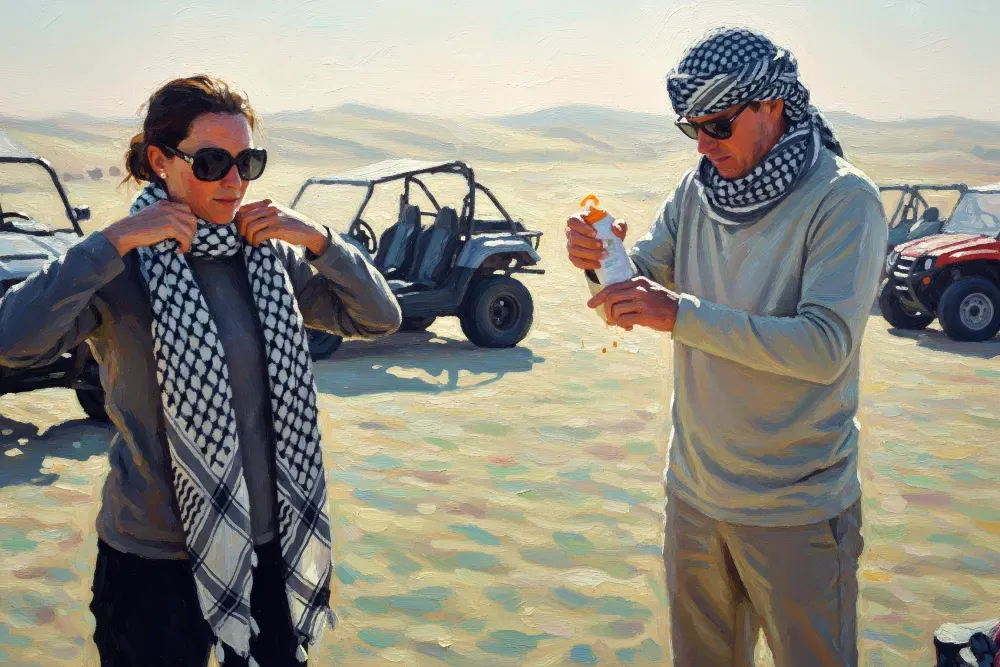
Consider neck gaiters or buffs that can be pulled up to protect your neck and lower face. These versatile pieces block sun, keep sand out of your mouth during particularly dusty sections, and can be dampened with water for cooling effect. Make sure you have the right desert outfit to enjoy your trip in comfort, style, without any worry of the sun.
The Sunscreen Situation: Not All Protection is Created Equal
Here's where most first-time desert adventurers get things wrong: they apply regular SPF 30 sunscreen they'd use at a pool or normal day out, and think that covers it. One of the best ways to avoid sunburn on desert buggy trips starts with picking out a good sunscreen for serious protection.
You need broad-spectrum sunscreen with SPF 50 minimum, preferably SPF 100, and it’s not an exaggeration. The combination of direct exposure, reflected UV, and extended time outdoors makes lower SPF insufficient. Sunscreens with water-resistant formulas are the best to protect you from the desert weather and the effects of sweating.
Application technique matters just as much as SPF rating:
Apply sunscreen 30 minutes before your ride, giving your skin time to absorb properly. It’s important you apply substantial quantities. Most people use about half the amount they actually need. Ensure you cover every exposed area: face, ears (especially your ears), back of the neck, arms, hands, and legs if you're wearing shorts.
Reapply every two hours. Even if your bottle says "all day protection," you need to reapply to keep you protected. Desert conditions, sweat, and friction from safety harnesses all break down sunscreen faster than normal. Set a timer on your phone if you need to. It’s best to stay protected at all costs.
Eye Protection: More Than Fashion
Your eyes need serious attention as most desert buggy safety tips for skin and eyes would recommend. Standard sunglasses won't cut it for desert bugging. You need wrap-around styles that protect from all angles, including side glare from reflected sun off the sand.
Look for sunglasses that block 100% of UVA and UVB rays. Polarized lenses help reduce glare dramatically, making it easier to see terrain changes and navigate effectively. This isn't just comfort; it's safety. Being able to clearly see dunes, drops, and obstacles keeps you in control of your vehicle.
Many experienced riders prefer goggles over sunglasses for desert buggy adventures. Goggles seal against your face, keeping out sand and dust while providing superior sun protection. They won't slide off during bumpy rides, and they protect a larger area around your eyes. Some premium goggles even include interchangeable lenses for different light conditions.
According to Desert Hiking Company's comprehensive sun protection guide, eye damage from UV exposure is cumulative and irreversible. Each unprotected desert exposure might contribute to long-term eye problems including cataracts and macular degeneration. Protecting your eyes while also having fun is crucial.
The Hat Debate: Wide Brim vs. Cap
Hats provide crucial sun protection on buggy tours, but choosing the right style matters. Wide-brimmed hats offer maximum protection for your face, ears, and neck. However, they can catch wind at speed and potentially blow off during intense riding sections.
Many buggy riders prefer fitted baseball caps or bucket hats with chin straps that stay secure during fast maneuvers. While these provide less coverage than wide brims, they're practical for the activity. The key is ensuring whatever hat you choose stays on your head and provides at least some shade for your face.
Some clever riders wear baseball caps during intense riding sections, then switch to wide-brimmed hats during breaks when they're stationary. But it’s essential you pick the right hat for your adventures always
Lip Protection: The Often Forgotten Essential
Your lips have extremely thin skin with no melanin protection, making them incredibly vulnerable to damage from the sun. Chapped, burned lips are not only painful but can also crack and bleed, creating risks for infections in dusty desert conditions.
Carry SPF 30+ lip balm and reapply frequently throughout your ride. The combination of sun, wind, and dry desert air cause your lips to crack easily. Apply lip balm before sunscreen (so sunscreen doesn't contaminate the applicator), then reapply at least every two hours or whenever you drink water.
Look for lip products containing moisturizers like beeswax or shea butter alongside sun protection. Your lips need both UV protection and hydration to survive desert conditions comfortably.
Ride Timing: Strategic Ride Scheduling
One of the best ways to avoid sunburn on desert buggy trips is choosing when you ride as carefully as you prepare what you wear. The sun's intensity varies dramatically throughout the day, with UV radiation peaking between 10 AM and 3 PM.
Morning and evening buggy rides offer significantly reduced sun exposure while providing stunning lighting conditions. Early morning rides (6-9 AM) feature cooler temperatures, firmer sand conditions, and gentler sunlight. Evening sessions (4-6:30 PM) provide gorgeous sunset backdrops while avoiding the most intense midday rays.
If your schedule only allows midday rides, double down on all protection measures discussed earlier. Midday desert rides are absolutely possible and can be fantastic experiences with proper precautions.
Hydration: Internal Sun Protection
While not directly about skin protection, hydration plays a crucial role in how your body handles sun exposure. Dehydrated skin burns faster and heals slower than properly hydrated skin. Plus, dehydration compounds heat exhaustion risk, making sun exposure even more dangerous.
Start hydrating the day before your buggy adventure. Drink plenty of water throughout your ride, even if you don't feel particularly thirsty. The dry desert air and wind mask how much moisture your body is losing through respiration and perspiration.
Bring more water than you think you'll need. A good rule is one liter per hour of desert activity, more if temperatures are extreme. Many desert buggy rental in Dubai packages include water, but bringing extra never hurts.
Special Considerations for Children
If you're bringing kids on your buggy adventure, their sun protection needs extra attention. Children's skin is more sensitive and can suffer burns faster than adult skin. Dress children in UPF-rated clothing from head to toe. Apply sunscreen even under clothing for extra protection. Use children-specific sunscreen formulas, which are often gentler on sensitive skin. Reapply with more attention to detail for kids, as they tend to sweat more than adults.
When booking family-friendly desert trips or buggy experiences, choose morning or evening time slots to minimize sun exposure. Four-seater buggies allow you to keep children directly under your supervision while navigating challenging terrain.
You First, Your Adventures Next!
Sun protection on buggy tours transforms your overall experience. Proper protection allows you to focus entirely on the thrill of the ride rather than worrying about sun burns. You can stay out longer, enjoy completely immersing yourself in the adventure, and return home with nothing but fantastic memories and amazing photos.
Whether you're booking your first desert adventure or you're a seasoned desert warrior, sun protection is always and ever remains a top priority.
FAQs
- What type of sunscreen is best for the desert?
It is recommended you use broad spectrum (protects against UVA and UVB rays) sunscreen with an SPF of at least 30 and higher.
- How much sunscreen should I apply, and how often?
The rule of thumb is to apply about one shot glass full for your skin. Apply generously to all exposed body parts. Apply 15-30 minutes before departure and every two hours during your ride.
- What kind of clothing should I wear in the desert?
The best is to wear comfortable but protective clothing. Loose-fitting, lightweight, and breathable clothing that covers as much skin as possible is recommended (long sleeves and pants).
- How important is hydration in the desert?
As a rule of thumb, always take more water than you’ll ever need.






 Or drop us a mail at help@beno.com