Desert buggy adventures deliver speed, freedom, and a thrill, but they also demand respect for the terrain. Unlike paved courses, desert trails are in constant flux: dunes reshape with the wind overnight, light changes visibility, and what looks like a smooth slope can hide abrupt drops or soft patches. This article examines some common risks on buggy trails, the ways to recognise them well in advance, and some practical ways of staying out of trouble while confidently cruising the dunes.
Getting the hang of the trails isn't about going hard; it's about being able to read the environment and prepare for the hazards that present themselves. Whether a first-timer or a seasoned off-road rider looking to refine your skills, learning buggy trail safety tips makes the difference between an unforgettable ride and an avoidable mistake.
Understanding Desert Soil
Desert buggy trails are not fixed; they are dynamic. Sand density changes with temperature, moisture, weather and wind. Morning usually brings firmer ground, while afternoon conditions make the sand loose and powdery, in which one can get trapped.
Dunes also come in a variety of shapes. Some have gentle crests, others sport sharp ridgelines that drop off steeply on the far side. These "slip faces" are a major rollover risk for riders who don't slow down and check their approach.
First rule of hazard awareness: no two dunes behave the same. Understanding how to stay safe on buggy trails Dubai ensures a confident ride from start to finish.

Common Buggy-Trail Hazards to Watch for
Drop-offs are among the most overlooked hazards. A dune may appear smooth from a distance, but its far side may drop steeply. Approaching crests at too much speed or head-on, without seeing over them, invites a rollover.
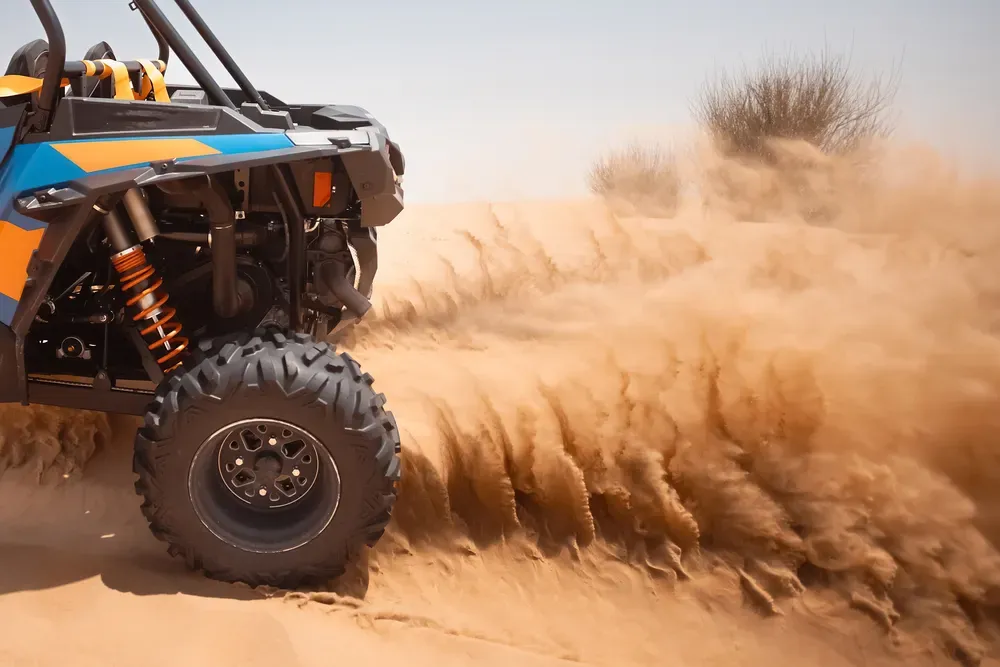
Soft sand pockets are another frequent problem. They can appear harmless, but soon cause a buggy down into rapid deceleration, throwing you out of balance or overworking the vehicle. You will find them at the bottom of dunes, in shade, or where multiple tyre tracks converge.
Ruts and old tyre marks may appear to you as pathways, where following them may actually destabilise your ride. Deep ruts can pull wheels out of alignment, particularly on turns or descents.
Windy weather is a risk, too: strong gusts reshape dunes in very short order, eliminating familiar trails and making surfaces uneven; blowing sand reduces visibility and makes it difficult or impossible to judge distances and slopes.
Reading the Terrain like a Pro
Seasoned riders rely on observation rather than speed. A key skill is scanning the dune ahead, not just the trail right in front of you.
Watch for colour cues: darker sand generally means compacted zones, while lighter-colored sand signals loose patches. Sharp ridgelines often translate to steep drop-offs on the far side.
Another cue is shadows: long ones thrown along a dune edge may indicate steep descents or sudden dips, and riding headlong over a crest without a glance to check the shadow pattern can lead to some unexpected drops.
The track patterns can tell a story, too. A trail that suddenly veers off or disappears may signal a detour around a tough section. Treat these cues as warnings, not as challenges.
Speed Control—The Best Safety Tool
Excessive speed is the most common factor in buggy accidents. Buggies are powerful, but controlled speed gives you time to react to sudden terrain changes.
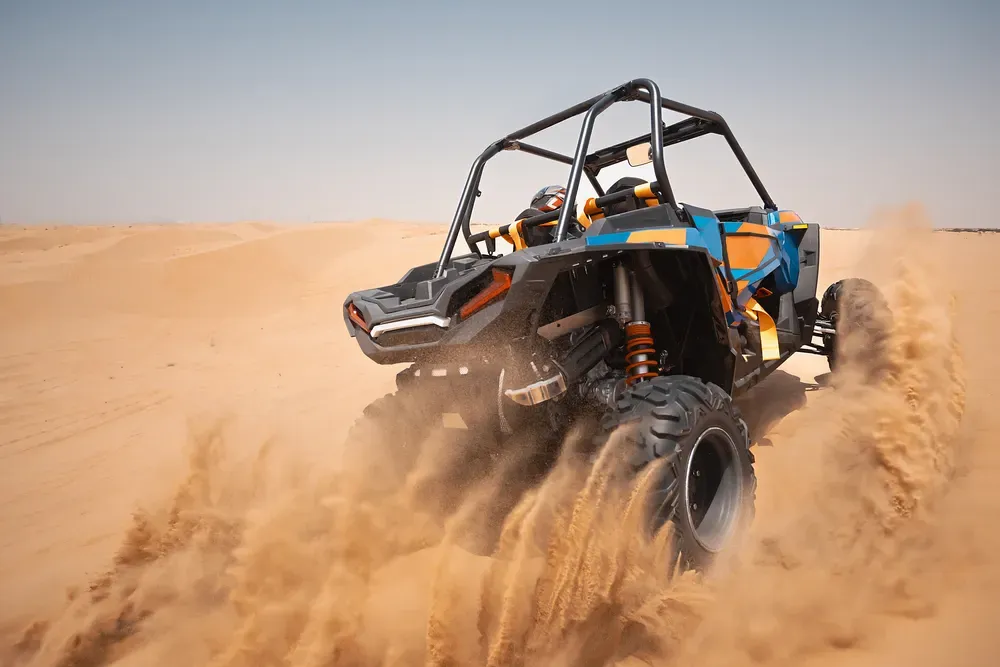
Approach dune crests slowly and at a slight angle rather than head-on to increase visibility and stability and decrease rollover risk. When descending, do not hard brake but let the buggy roll smoothly down with engine control.
Cornering on the sand needs gentler inputs compared to firm ground. Abrupt steering on loose surfaces can cause it to fishtail. Smooth, deliberate motions keep the buggy balanced.
Even if you get stuck, don't panic. Go over your emergency guide and recovery tips to get you out safely.
Correct Equipment and Arrangement
Safety is not all about skills but rather preparation. A well-fitted helmet, gloves, and protective eyewear protect you from flying sand and other debris. Seat belts and harnesses should be snug before you move.
Setting up a vehicle is important. The pressure of the tyres affects traction: slightly deflated tyres increase the contact area, thus improving grip in soft sand. Stay within manufacturer specs.
Check brakes, suspension, and steering before heading out. A quick pre-ride inspection can save you from a breakdown in some remote area.
Riding Smart: Solo vs. Guided
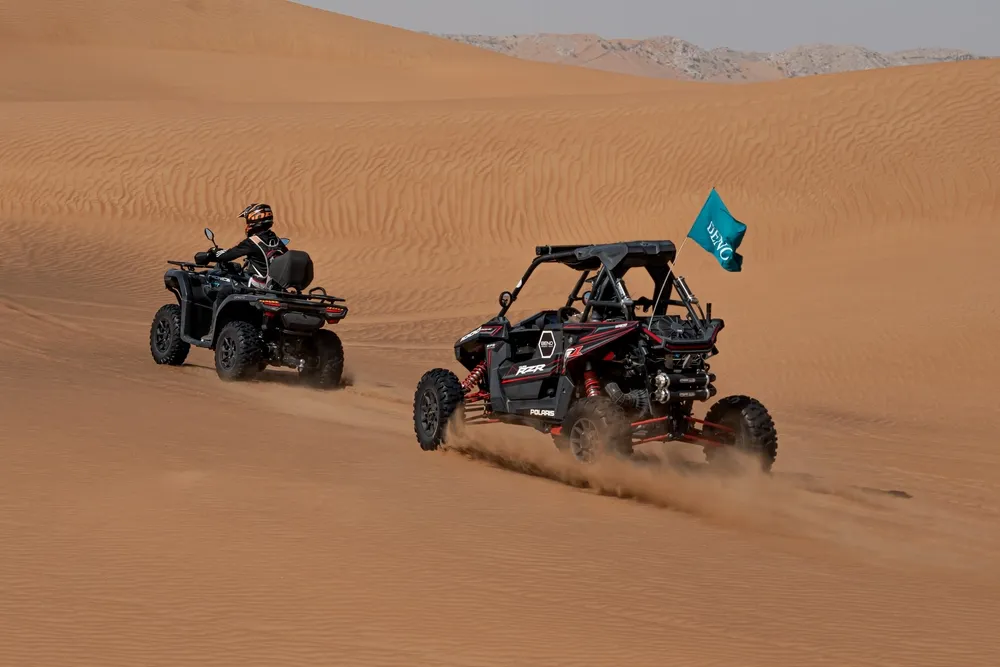
Advanced bikers can go out alone or in groups, while for a total beginner, going on a guided trip reduces the risks greatly. Professional guides understand the repeating terrain patterns, the safest routes, and real-time hazard assessment.
Companies such as Beno point out that their safety-first riding is done with well-maintained buggies, expert guides, and structured routes that balance thrills with control. Such guided tours enable one to enjoy the adrenaline while learning responsible riding; hence, they are ideal for both beginners and returning riders.
Tips to Avoid Hazards while Driving a Buggy
Even with precautions, lots of people still get stuck or have minor issues when off-roading. Knowing basic recovery and signalling techniques help you stay in control.
If you sink into soft sand, don't spin the wheels hard; it just digs you in. Ease off the throttle, straighten the wheels, and gently rock the buggy if possible (slightly reducing tyre pressure can help).
Carry communications devices and ride in designated areas. Desert environments require knowing when to stop and reassess as much as when to push forward.
Knowing the hazards doesn't kill the excitement; it heightens it. A confident feeling of control allows the rider to enjoy the desert safely.
Why Awareness of Hazards Improve the Experience
Anticipate changes in terrain to enjoy the scenery, safely push the limits, and develop real off-road skills. Buggy riding fuses adrenaline and desert respect. The more you learn to read the terrain, the more fun each ride becomes.
Taking the proper buggy ride Dubai precautions adds to the thrill without compromising safety. At Beno, our utmost priority is safety, so your fun and experience are never compromised. Book your buggy adventure today and rule the trails like a pro!
FAQs
- What's the most common hazard with dune buggies?
Sharp, hidden drop-offs and steep dune slip faces (especially if travelling too fast while approaching the crest).
- Are dune buggy rides safe for beginners?
Yes, assuming they are taken through guided tours with proper safety gear and instruction.
- As a beginner, do I benefit from professional guidance?
Yes, and if you are riding alone best times of day for riding are: early morning and late afternoon when the sand is firmer, and temperatures are comfortable.
- Do I need off-road experience?
No, not for guided rides, but general basic safety awareness is helpful.
- What to wear on a buggy ride?
Comfortable clothing and closed-toe shoes with protection, such as helmets and goggles.







 Or drop us a mail at help@beno.com